


Understanding the Differences Between Alumina, Zirconia, and Silicon Carbide Ceramics

Updated: Nov 22, 2025
Technical ceramics play a critical role in modern engineering, industrial applications, aerospace, electronics, energy systems, and advanced manufacturing. Selecting the right material is essential because each ceramic has unique chemical, thermal, mechanical, and electrical properties that determine performance under operating conditions. In this comprehensive guide, we explore the three most commonly used technical ceramics—Alumina, Zirconia, and Silicon Carbide—while comparing their properties, applications, advantages, and limitations to help you make the right selection for your project.
What Are Technical Ceramics?
Technical ceramics, sometimes referred to as engineered ceramics, are inorganic, solid, non-metallic materials designed for high-performance applications. Unlike traditional ceramics used in pottery and tile, technical ceramics are manufactured with precise control over grain structure, density, and purity to provide:
Extreme hardness
Excellent thermal resistance
High compression strength
Dimensional stability
Electrical insulation or conductivity
Resistance to corrosion, wear, and chemical attack
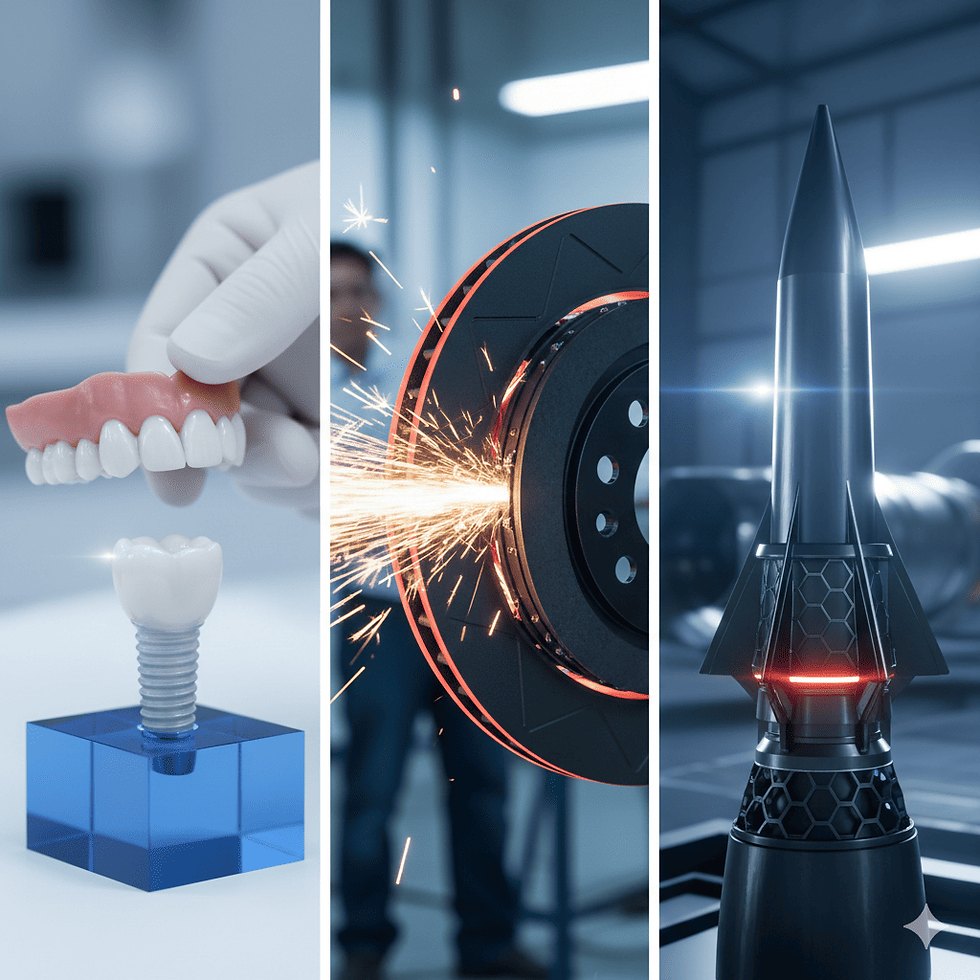
Because of their outstanding characteristics, these ceramics have become essential in industries such as:
Aerospace
Medical implants and devices
Mechanical engineering
Power generation
Defense manufacturing
Electronics and semiconductor industries
Why Material Selection Matters
Different applications require different performance behaviors. For example:
A cutting tool must resist wear and high friction.
A medical implant must be tough and biocompatible.
An aerospace component must endure extreme temperature fluctuations.
An electronic substrate must insulate electricity effectively.
Choosing the wrong ceramic can lead to failure, downtime, costly replacement, or compromised safety. Therefore, understanding the key differences between Alumina, Zirconia, and Silicon Carbide is essential.

Comparison of Major Technical Ceramics
Below is a quick comparative overview of the most important material indicators:
Property Comparison Table
Property | Alumina | Zirconia | Silicon Carbide |
Hardness | High | Medium | Extremely High |
Toughness | Medium | High | Medium |
Thermal Resistance | High | High | Extreme |
Wear Resistance | High | Very High | Extreme |
Electrical Properties | High electrical insulation | Insulating to partially conductive | Conductive |
Density | Medium | High | Low |
Thermal Conductivity | Moderate | Low | Very High |
This comparison shows that each ceramic material has performance strengths that match specific industrial requirements. Now, let’s look deeper into each material individually.
Understanding Alumina Ceramics (Al₂O₃)
What Is Alumina?
Alumina, or Aluminum Oxide, is one of the oldest and most widely used technical ceramics. It offers a combination of high temperature strength, electrical insulation, and resistance to wear and corrosion.
Key Properties of Alumina
Excellent electrical insulation
High hardness and durability
Resistant to corrosion and chemical attack
Low cost compared to other advanced ceramics
Good thermal stability
Common Applications of Alumina
Alumina ceramics are used in:
Electronic substrates and circuit boards
Spark plugs
Power resistors
Bearings and seals
Wear-resistant machine components
Furnace and kiln liners
Laboratory equipment
Because of its stability and affordability, Alumina is often the first choice for high-performance ceramic applications requiring durability and insulation.
Advantages of Alumina
Cost-effective
High mechanical strength
Readily available in multiple grades
Excellent dielectric properties
Limitations of Alumina
Lower toughness compared to Zirconia
Not ideal for sudden impact or high mechanical shock applications
Understanding Zirconia Ceramics (ZrO₂)
What Is Zirconia?
Zirconia, also known as Zirconium Dioxide, is prized for its superior fracture toughness and strength. It is sometimes called “ceramic steel” due to its mechanical reliability.
Key Properties of Zirconia
High fracture toughness
Withstands mechanical shock
Good resistance to wear and friction
Some grades exhibit transformation toughening
Excellent biocompatibility
Common Applications of Zirconia
Zirconia is widely used in:
Precision cutting tools
Orthopedic and dental implants
Pump and valve components
High-performance bearings
Fuel cell technology
Measurement and sensor devices
Why Zirconia Is Used in Medical Applications
Zirconia is bioinert, corrosion-resistant inside the human body, and strong enough to mimic bone properties—making it ideal for medical implants and dental prosthetics like crowns and bridges.
Advantages of Zirconia
Highest toughness among technical ceramics
Suitable for impact-prone applications
Wear-resistant and long-lasting
Biocompatible
Limitations of Zirconia
More expensive than Alumina
Lower thermal conductivity compared to Silicon Carbide
Not as temperature-stable at extreme heat
Understanding Silicon Carbide Ceramics (SiC)
What Is Silicon Carbide?
Silicon Carbide is one of the hardest advanced ceramic materials known, second only to diamonds. It provides unmatched thermal stability, oxidation resistance, and wear performance.
Key Properties of Silicon Carbide
Extremely high hardness and wear resistance
Outstanding thermal conductivity
Excellent high-temperature strength
Resistant to acids, alkalis, and oxidation
Strong structural stability under heat
Common Applications of Silicon Carbide
SiC is selected for the toughest industrial environments, including:
Aerospace engine components
High-temperature furnace parts
Kiln furniture
Armor plating
Semiconductor wafers
Bearings, sleeves, and seals
High-performance brake discs
Why Silicon Carbide Excels in Extreme Environments
Industries where temperatures exceed 1,400°C rely on SiC because:
It maintains strength at red-hot temperatures
It prevents thermal deformation
It resists chemical erosion
It handles extreme friction loads
Advantages of Silicon Carbide
Top-tier wear resistance
Excellent heat tolerances
Lightweight yet incredibly strong
Long service life in severe environments
Limitations of Silicon Carbide
Lower toughness than Zirconia
Can require precision machining
Higher cost than basic ceramic materials
Choosing the Right Ceramic for Your Application
1. When to Choose Alumina
Best suited for:
Electrical insulation applications
Cost-sensitive industrial components
Wear-resistant parts not exposed to heavy impact
Thermal-resistant fixtures in furnaces
2. When to Choose Zirconia
Ideal for:
Medical and dental components
Machinery subject to continuous vibration or impact
Precision bearings and pump components
Engineering applications needing high toughness
3. When to Choose Silicon Carbide
Perfect for:
Aerospace and defense industries
Components running at extreme temperatures
Applications involving heavy abrasion and friction
High-efficiency thermal systems
Additional Factors to Consider Before Finalizing a Ceramic Material
When selecting a ceramic, evaluate:
Mechanical Load: Does the part face compression, impact, torsion, or wear?
Operating Temperature: Will it run at ambient heat or furnace-level extreme?
Electrical Behavior: Should the material insulate or conduct electricity?
Chemical Environment: Will acids, alkalis, or oxidation be present?
Manufacturing Compatibility: Can the component be machined or near-net formed?
Budget and Production Costs: Higher-grade ceramics can improve performance but increase expenditure.
A balanced evaluation ensures maximum performance, reliability, and long-term value.
Future of Technical Ceramics
The global demand for advanced ceramics is growing rapidly due to:
Electrification of industries
EV and aerospace growth
Need for lightweight, high-strength materials
Miniaturization of electronics
Expansion of high-temperature manufacturing processes
As technology evolves, ceramics like Alumina, Zirconia, and Silicon Carbide will continue to replace metals in critical industries due to their strength, durability, and thermal stability.
Conclusion
Technical ceramics are essential for advanced industrial systems where materials must withstand extreme conditions. While Alumina, Zirconia, and Silicon Carbide may appear similar, their unique properties serve different engineering needs:
Alumina: Cost-effective and excellent for electrical insulation and wear resistance
Zirconia: Toughest ceramic, ideal for structural and medical applications
Silicon Carbide: Ultra-hard and heat-resistant, perfect for aerospace and furnace environments
By understanding the specific performance requirements of your project and comparing ceramic material properties, you can make a well-informed decision that maximizes efficiency, reliability, and product lifespan.
Choosing the right technical ceramic material is not just a design decision—it is a critical step toward operational success and long-term performance.


Comments