


Microns Advanced Ceramics Advantage
-
High-purity raw materials, with a purity of over 98%
-
Ceramic grains are uniform and fine, for more significant performance
-
Withstands ultra-high temperatures, high pressure, and impact loads
-
Superior impact resistance compared to most lightweight materials
-
Smooth, flat surface with strong wear resistance
What is Boron Carbide Ceramics
Boron carbide, also known as "black diamond," has the chemical formula B4C and is one of the hardest known boron-based materials, with major applications in nuclear technology, military hardware, and armor applications.
Boron carbide also has a high melting point, high elastic modulus, low density, good thermal stability, and strong neutron-absorption capability.


New Products of Boron Carbide Ceramics
The strong hardness makes boron carbide ceramic have excellent wear resistance. Its high melting point (~2450°C) allows it to perform under high operating temperatures, and its low density reduces the burden on equipment. Our custom boron carbide nozzles are made through a high-precision process to ensure the inner hole is smooth and the size is accurate.

High Hardness
Exceeded only by diamond and cubic boron nitride
Low Density
Lightweight compared to other high-hardness materials
Absorbing Neutrons
Effective neutron absorption for nuclear applications
Wear-Resistant
Fine grain structure delivers high wear resistance
Boron Carbide Ceramics Feature Box
Why Is Boron Carbide Used for Bulletproofing?
The main reason boron carbide is used for bulletproofing is its extremely high hardness, light weight, and high impact resistance. Its hardness is second only to diamond, allowing it to quickly disperse and absorb impact energy, while its low density significantly reduces the wearer's carrying burden.
Learn more: Boron Carbide as Bulletproof Material (link to blog article)

Core Technology and Process
-
Improvement of Boron Carbide Ceramic Powder
-
Improved material formula
-
Refined mold design and production
-
Unique sintering process
Boron Carbide Parameters


Why Choose Microns Advanced Ceramics for Custom Alumina Ceramics?
Microns Advanced Ceramics has 10 years of experience producing and machining alumina ceramic components for demanding industrial applications. Our team manages every stage from raw material sourcing and forming to sintering, precision grinding, and final inspection — giving customers a single point of accountability for quality and delivery. Our engineering team works directly with customers during design and prototyping to resolve manufacturability issues before full production, reducing lead time and cost on complex geometries.

Application of Boron Carbide Ceramics

5pm-8pm
DAILY
Military Equipment
Manufacture of body armor, protective plates, and armor systems for personnel, vehicles, and helicopters.

5pm-8pm
DAILY
Nuclear Industry
Used in nuclear reactor control rods, radiation-shielding materials, and nuclear waste absorption elements.
5pm-8pm
DAILY
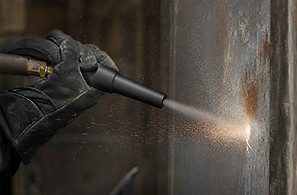
Sandblasting and Surface Treatment
Used in high-precision sandblasting nozzles for cleaning metal surfaces, suited to high-intensity operations with a long service life.

5pm-8pm
DAILY
Car Engine
Suitable for low-friction, high-temperature engine parts, requiring less oil quality and lasting longer than metal equivalents.

5pm-8pm
DAILY
Seals and Bearings
Used in wear-resistant sealing and bearing materials for chemical pumps and high-pressure fittings.
Pressureless Sintering Process of Boron Carbide Ceramics

Frequently Asked Questions
Why choose boron carbide in high wear-resistant applications?
Boron carbide's hardness is exceeded only by diamond and cubic boron nitride, giving it exceptional resistance to abrasion in nozzles, liners, and cutting tools.
What is the heat resistance of boron carbide materials?
Boron carbide maintains structural integrity at high operating temperatures and has a melting point of approximately 2450°C.
Is boron carbide ceramic harder than silicon carbide?
Yes. Boron carbide is significantly harder than silicon carbide, ranking third among known materials after diamond and cubic boron nitride, which is why it's chosen for the most demanding wear and ballistic applications.
Is boron carbide ceramic electrically conductive?
Boron carbide has semi-conductive properties rather than being a pure insulator or conductor, which sets it apart from oxide ceramics like alumina, and this property can be relevant for certain electrode or sensor applications.
How to customize?
Submit drawings, 3D models, or performance requirements for a manufacturability review; we then produce custom boron carbide components to your specified shape, dimensions, and tolerances.