


What Is Alumina Ceramic?
Alumina ceramic (Al2O3, aluminum oxide) is one of the most widely used technical ceramics, prized for its combination of high hardness, strong electrical insulation, and resistance to wear and chemical attack. It is produced by pressing and sintering high-purity aluminum oxide powder at high temperature, resulting in a dense, fine-grained ceramic body. Because alumina performs reliably across a wide purity range — from 94% up to 99.99% — it is used across industries from general industrial insulators to ultra-high-reliability semiconductor components. Its balance of cost, machinability, and performance makes it the default starting point for most technical ceramic applications.
High Hardness
Strong resistance to scratching, abrasion, and wear
Excellent Thermal Conductivity
Efficient heat dissipation for thermal management applications
Good Chemical Stability
Resists acids, alkalis, and corrosive environments
High Temperature Stability
Maintains structural integrity at elevated operating temperatures
Aluminum Oxide Ceramic Feature Box
Alumina Ceramics of Different Purity
Microns Advanced Ceramics produces alumina components across multiple purity grades, each suited to different performance and cost requirements:94%–95% Alumina — Cost-effective option for general-purpose insulators and wear parts where extreme performance isn't required99% Alumina — Improved mechanical strength and electrical insulation for more demanding industrial use99.5% Alumina —
Higher density and wear resistance, common in mechanical and electrical component applications99.99% (High-Purity) Alumina — Used in semiconductor, RF/microwave, and high-reliability electronic applications where minimal impurities are criticalCommon product forms: rods, tubes, plates, substrates, rings, and custom-machined shapes.
Specialty products: metallized ceramic parts (for brazing/soldering into metal assemblies), and precision-ground components for demanding tolerance applications.

Why Choose Microns Advanced Ceramics for Custom Alumina Ceramics?
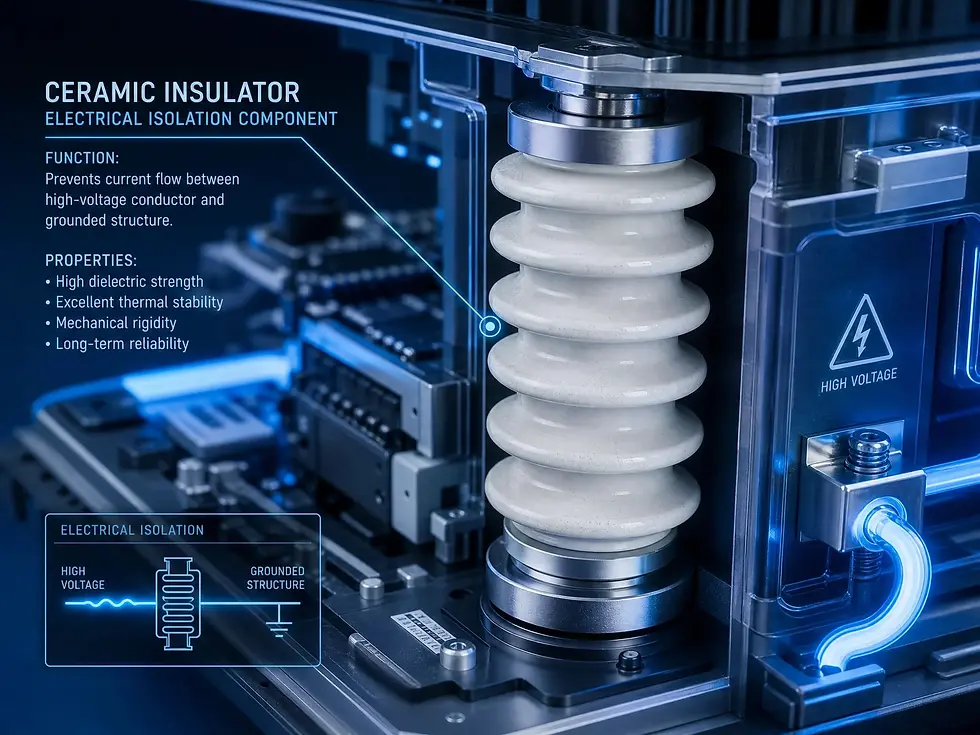
Microns Advanced Ceramics has 10 years of experience producing and machining alumina ceramic components for demanding industrial applications. Our team manages every stage from raw material sourcing and forming to sintering, precision grinding, and final inspection — giving customers a single point of accountability for quality and delivery.
Our engineering team works directly with customers during design and prototyping to resolve manufacturability issues before full production, reducing lead time and cost on complex geometries.

Application of Alumina Ceramics in Different Industries

5pm-8pm
DAILY
Electronics
Alumina substrates, insulators, and packaging components provide reliable electrical insulation and thermal management.

5pm-8pm
DAILY
Chemical
Corrosion-resistant alumina liners, seals, and valve parts withstand exposure to acids and aggressive chemicals.

5pm-8pm
DAILY
Mechanical Engineering
Wear-resistant alumina bushings, bearings, and seal rings extend equipment service life.
5pm-8pm
DAILY
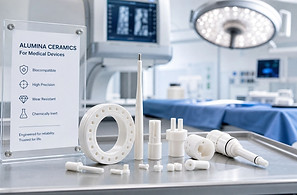
Medical Devices
Biocompatible alumina components support diagnostic equipment and precision instruments.

5pm-8pm
DAILY
Research & Laboratory
Alumina crucibles and insulating fixtures support high-temperature testing and analysis.
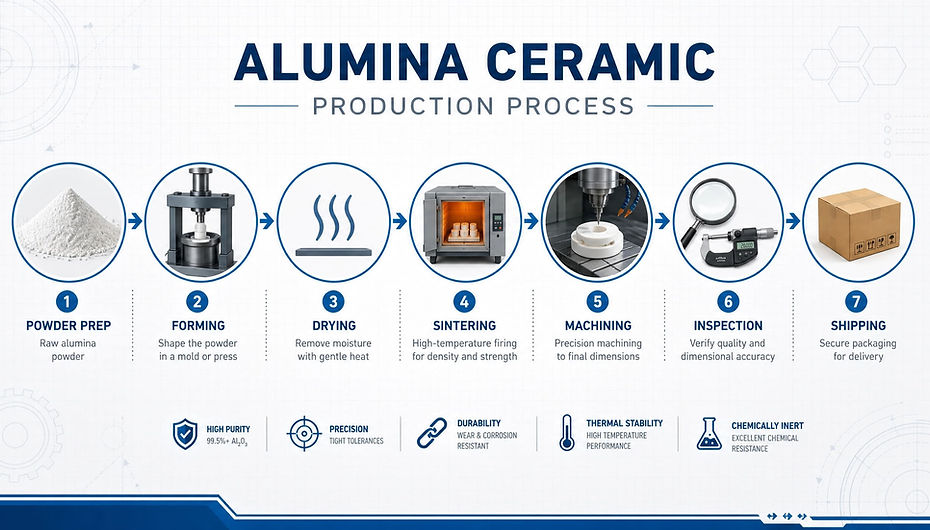
Alumina Ceramic Production Process
Frequently Asked Questions
Are alumina ceramics environmentally friendly and safe?
Yes. Alumina ceramic is chemically inert, non-toxic, and safe for industrial, medical, and lab use.
Can alumina ceramics be customized?
Yes. We offer custom shapes, dimensions, tolerances, and finishes based on your drawings or 3D models.
What's the difference between ATZ and ZTA?
Both combine alumina and zirconia, but the dominant phase (and resulting toughness vs. hardness balance) differs.
Should I choose alumina or another material?
Alumina is a strong general-purpose choice for hardness, insulation, and chemical resistance at a reasonable cost.